The conditional answer is yes—for some work, not automatically for the route
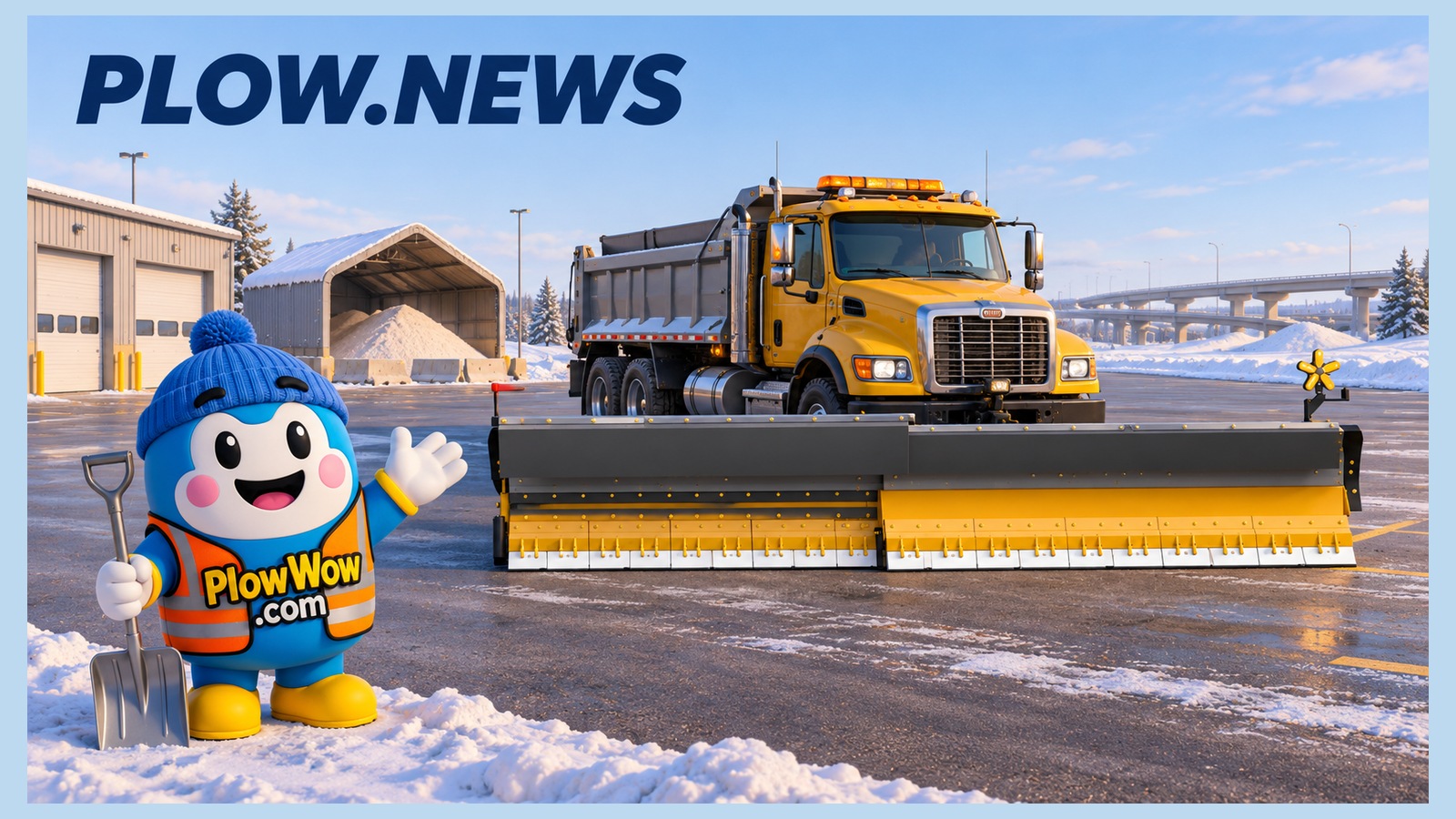
A wider adjustable front blade could let one suitable carrier cover pavement that otherwise needs another overlapping pass, or consolidate part of a two-machine operation. That possibility is worth evaluating on a specific municipal or highway route. It does not prove that a second truck can leave the roster. The question is what that truck does throughout the route, including work that a wider leading blade does not finish.
What the current specification actually says
Metal Pless lists the TRK EXT 1042-19 with a 10-foot box dimension, 19-foot extended dimension, 42-inch height and approximate weight of 4,340 lb. Its stated application range is 30,000–50,000 lb for trucks and wheel loaders. The product page currently marks availability as 2027. Those are manufacturer listings, not an approval for a particular carrier or a claim that the attachment is shipping now. Confirm fitment, loading, mounting and hydraulic requirements with the supplier.
Demonstrated earlier does not mean newly launched today
The manufacturer’s October 18, 2025 podcast episode notes already linked TruckMaxx EXT demonstrations ahead of Equip Expo 2025. That establishes earlier public demonstration links; it does not override the current availability statement. The supplied Metal Pless Facebook video is embedded below with a direct source link. It is manufacturer-hosted demonstration footage, not an independent comparative route test.
Extended blade width and angled clearing swath are different measurements
The span across an extended blade is not necessarily the strip cleared across the direction of travel. For a straight blade angled away from square, its transverse projection is smaller than its full length. Actual wing positions, overlaps and usable configuration also matter. We have not identified a model-specific angled-swath table in the reviewed product page, so 19 feet should not be treated as a guaranteed working swath at every angle. Nor should its smaller box dimension be read as the complete vehicle’s transport width.
Ask why the second truck is there
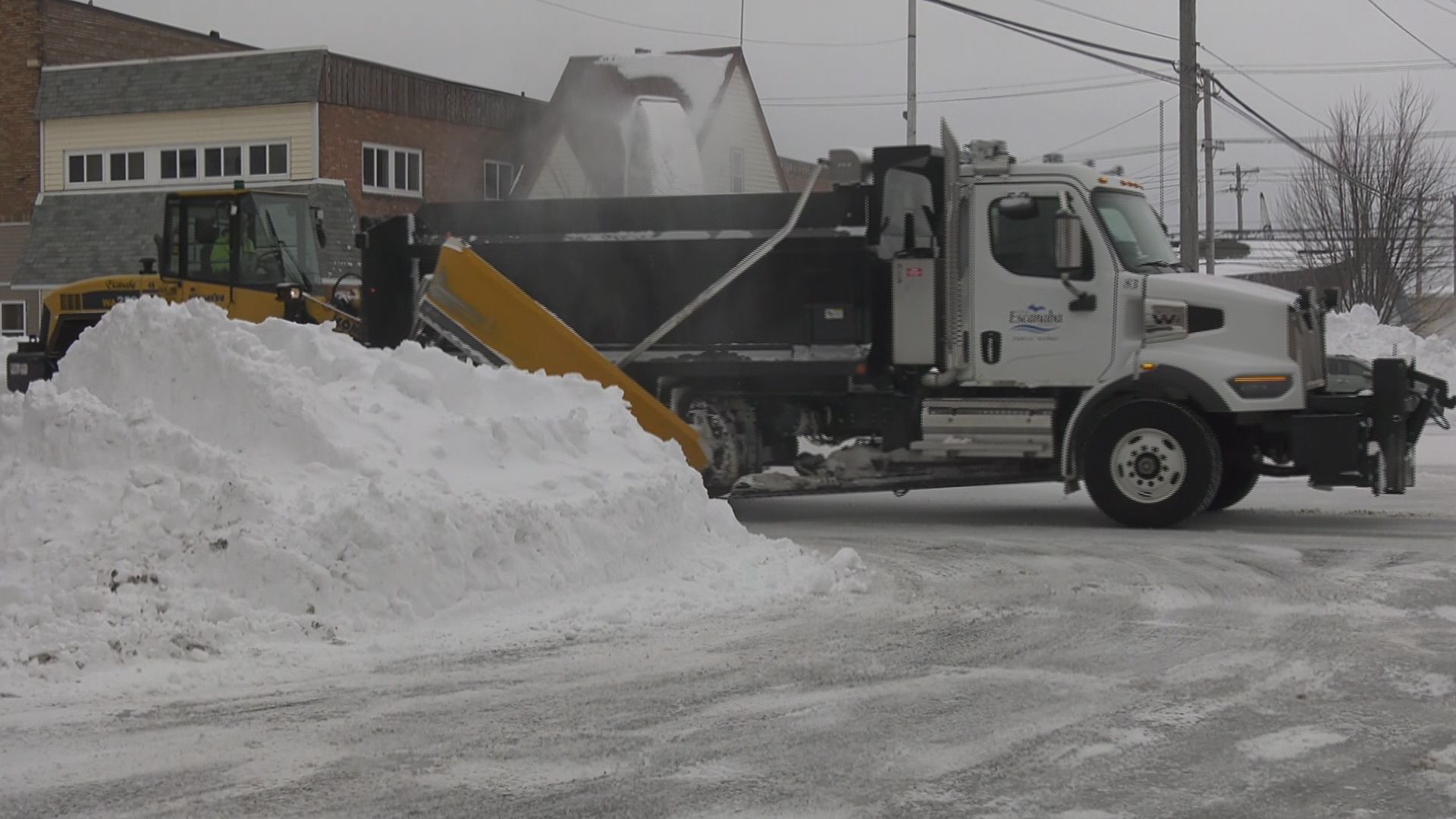
In a hypothetical two-truck route, the trailing unit might widen the cleared area. It might instead collect a windrow, finish a shoulder, treat the surface, clear an intersection or keep working while another vehicle reloads. Those are different jobs. A wider first pass could change the widening assignment while leaving other duties intact. If the leading blade simply puts a larger windrow where another truck must still collect it, the route has not become a one-truck operation just because the front attachment is wider.
Road geometry can interrupt the wide-blade opportunity
A long unobstructed section is different from a bridge approach, guardrail, traffic island, parked vehicle, turning lane or busy junction. Available width, crossfall, surface changes, traffic management and where displaced snow can go need route-level review. The carrier must remain suitable under the actual load and operating conditions. This is an engineering and operations question for the responsible fleet team, not permission to use maximum extension everywhere or exceed the equipment’s operating limits.
Nineteen feet is not an industry-wide size ceiling
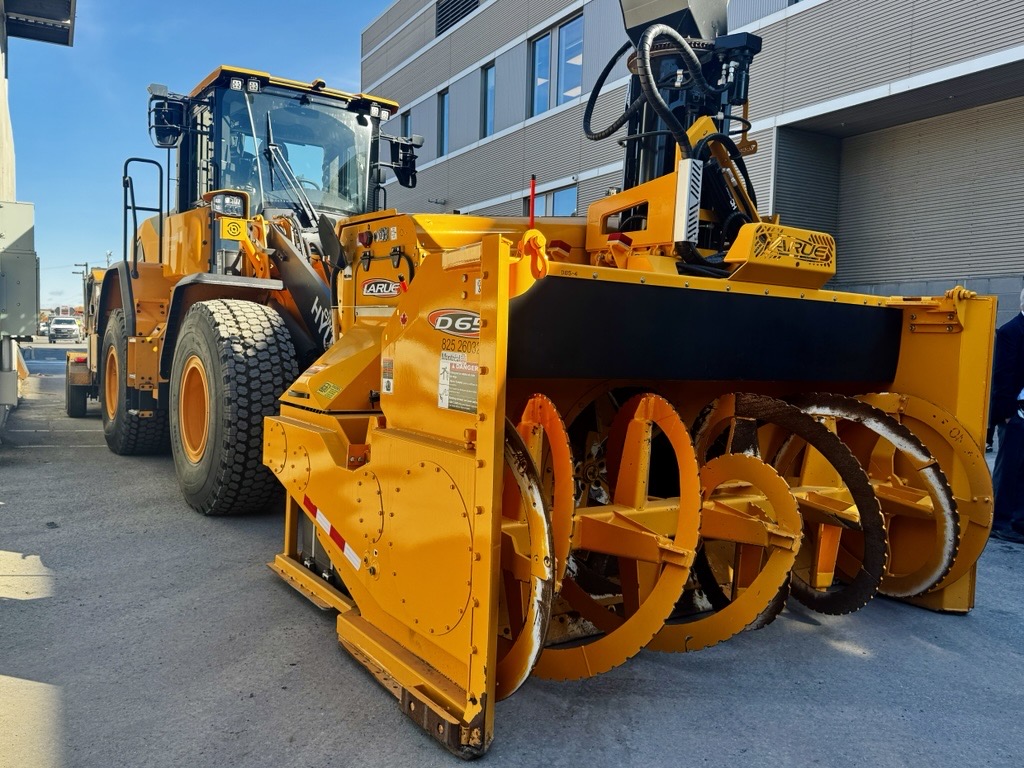
Wider specialty equipment already exists. Bucher Municipal describes Teplex road plough configurations with clearing widths up to 23 feet at a 32-degree angle. Pro-Tech lists Super Duty loader containment pushers in sizes up to 30 feet for airports and other large properties. Those examples use different equipment, applications and width descriptions; they are not a head-to-head TruckMaxx EXT performance comparison. The useful question is application fit, not which headline number is largest.
What a credible one-truck trial should record
Define the complete job and its required service level before changing the fleet. Record the actual configuration and swath, weather and snow characteristics, route obstructions, time spent turning and repositioning, cleanup and windrow work, treatment duties and any follow-up vehicle. Compare equivalent completed work rather than only the fastest open stretch. Keep the second vehicle’s capacity, backup role and other assignments visible in the comparison. These are proposed evaluation questions, not results of a trial we conducted.
Width can change an operation; evidence has to justify the fleet decision
TruckMaxx EXT is interesting because adjustable equipment can fit changing work areas. Metal Pless also positions TruckMaxx products within its municipal lineup. But a product listing and demonstration video do not establish a measured reduction in vehicles, labour, fuel, salt or route time. Our answer remains conditional: potentially one carrier for some work that otherwise takes two, if the complete route duties can be met. Until comparable operating evidence answers that question, there is no defensible universal two-for-one claim.
Watch the Metal Pless video
Watch the original Metal Pless video on Facebook ↗
Metal Pless: TruckMaxx EXT specifications and current availability ↗
Metal Pless company podcast, Episode1, October18,2025: earlier demonstration links ↗
Metal Pless municipal equipment lineup ↗
Bucher Municipal: Teplex telescopic road plough ↗
Pro-Tech: Super Duty loader containment plow ↗
Source reviewed Nov 17, 2026. Manufacturer specifications are attributed; the one-truck discussion is conditional editorial analysis, not a field test, procurement recommendation or measured savings claim. Current product page lists 2027 availability; earlier manufacturer demonstrations do not establish current delivery. No source-image reuse licence was found, so the featured illustration is original.