A useful map needs a useful question
Surrey’s winter-operations page offers a road-priority lookup and a snowplow tracker. The City says the tracker activates when plowing begins and provides approximate timeframes for areas last serviced. That is useful public information, but it answers a narrower question than a private property manager’s opening checklist. This guide is an evergreen interpretation of the current official page, checked October 24, 2026; it is not a newly announced tracker launch or a live storm report.
Begin with the road outside
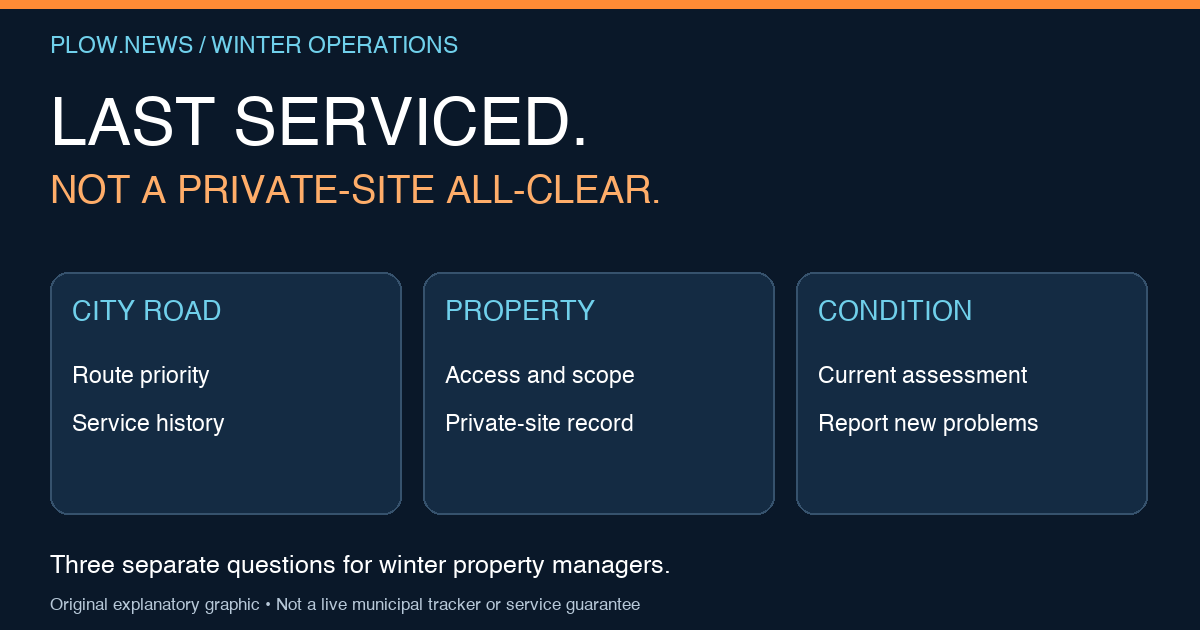
The City describes three road-priority levels. Its first category includes high-volume arterial and major collector roads and steep grades; the second includes secondary residential roads and access to long-term care facilities. Use the official address lookup for the actual road rather than assigning a priority from its appearance. A property’s own visitor parking, loading area and pedestrian route belong in a separate service plan. Keep the link to the municipal information beside that plan, clearly labelled so staff know which organisation each update describes.
A timestamp describes a record
A recent service marker should prompt a reader to check exactly what the map labels. It is not, by itself, a statement that an entrance is clear now, that a private contractor attended or that a person should travel. The practical habit is simple: write down the information’s source, its update time and the area it covers. Where a display does not answer a question, leave that question open rather than filling the gap with an assumption.
Make a separate private-site handover
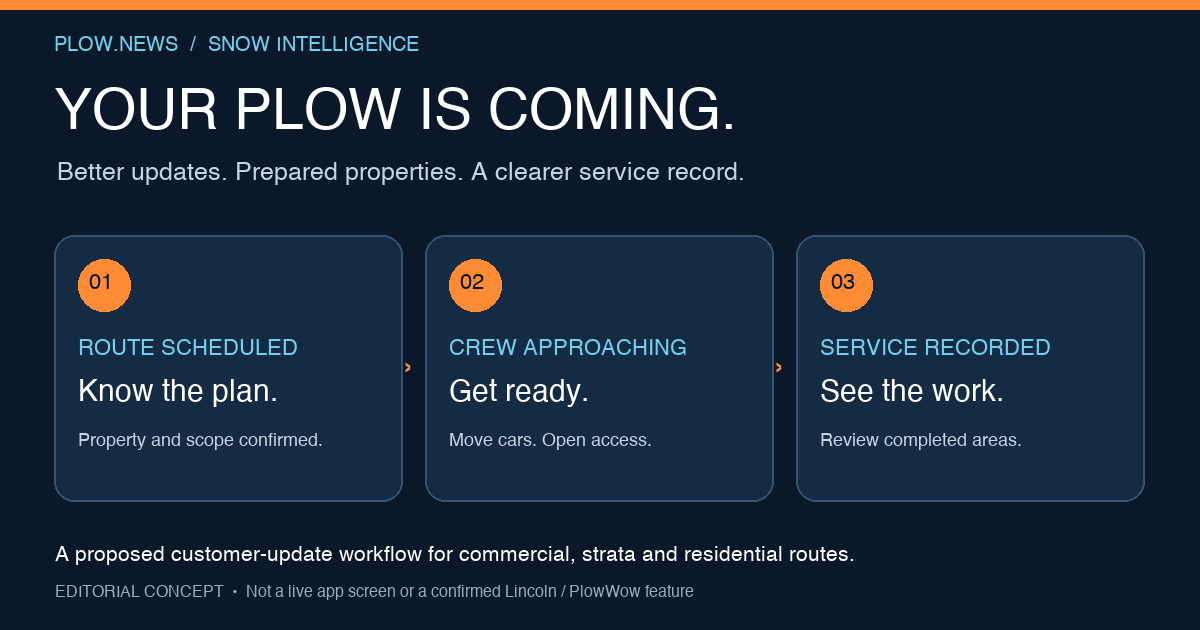
Before the next event, agree who records the private work and who receives the handover. A useful record identifies the contracted area, the task recorded, the time and any access restriction. For a fictional retail property, the lot might be accessible while a loading bay remains blocked. Those two statements should remain separate. This is an editorial example, not a reported Surrey job or a feature demonstrated in any app. It illustrates why a broad completion label can conceal the decision a manager actually needs to make.
Give staff an exception route
Decide in advance where an unresolved problem goes. A locked gate, parked vehicle or newly reported slippery area needs a clear responsible contact and an acknowledgement process. Keep municipal-road reports separate from private-contractor requests. Surrey’s page links its official reporting channel; private-site concerns should follow the property’s agreed arrangement. Do not publish a resident’s address, access code or personal contact details in a public status feed. A public map and an internal service conversation have different audiences.
Use three checks at opening time
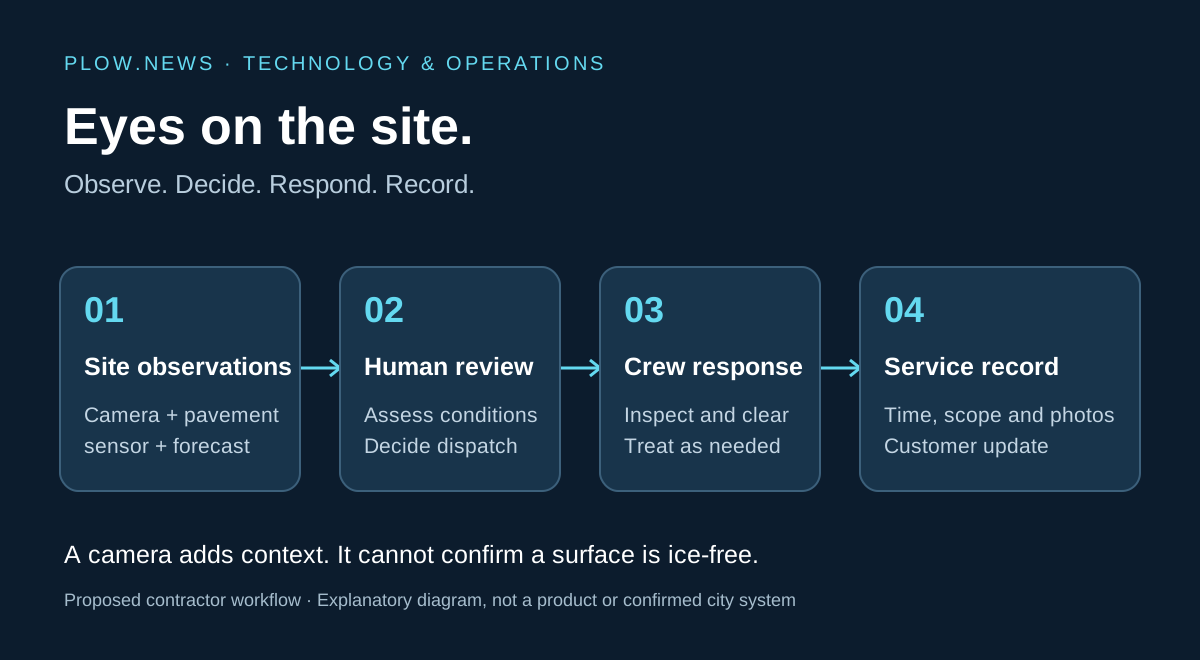
First, consult the official road information and read its labels and timestamps. Second, review the private contractor’s record against the agreed site scope. Third, follow the property’s process for assessing and reporting current conditions. These checks complement each other; one does not silently replace the others. Assign an owner to each unresolved item and record the next action. The value is a clearer handover, not a promise that a tracker removes the need for judgement or further work.
Keep the promise smaller than the evidence
Surrey’s source describes approximate service history. This article does not claim address-specific arrival alerts, guaranteed clearing times, an active storm response today or an integration with PlowWow™. A good winter update says what it knows, when it knew it and what remains outside its scope. That is a useful standard for both public information and a contractor’s customer messages.
City of Surrey: Winter Snow & Ice Control Operations — road priorities and snowplow tracker ↗
Source reviewed Oct 24, 2026. Checked October 24, 2026 against the City of Surrey’s winter-operations page. Its tracker describes approximate service history and activates when plowing starts. No current launch date is established. Private-site handover examples are our editorial analysis, not reported jobs or verified PlowWow™ app features. No municipal photos or logos reused. Plow.news and PlowWow™ share IAM network ownership.
Related resources
Official Surrey road-priority lookup and snowplow tracker →